

Some dates do not simply mark a technical milestone: they represent a civil choice.
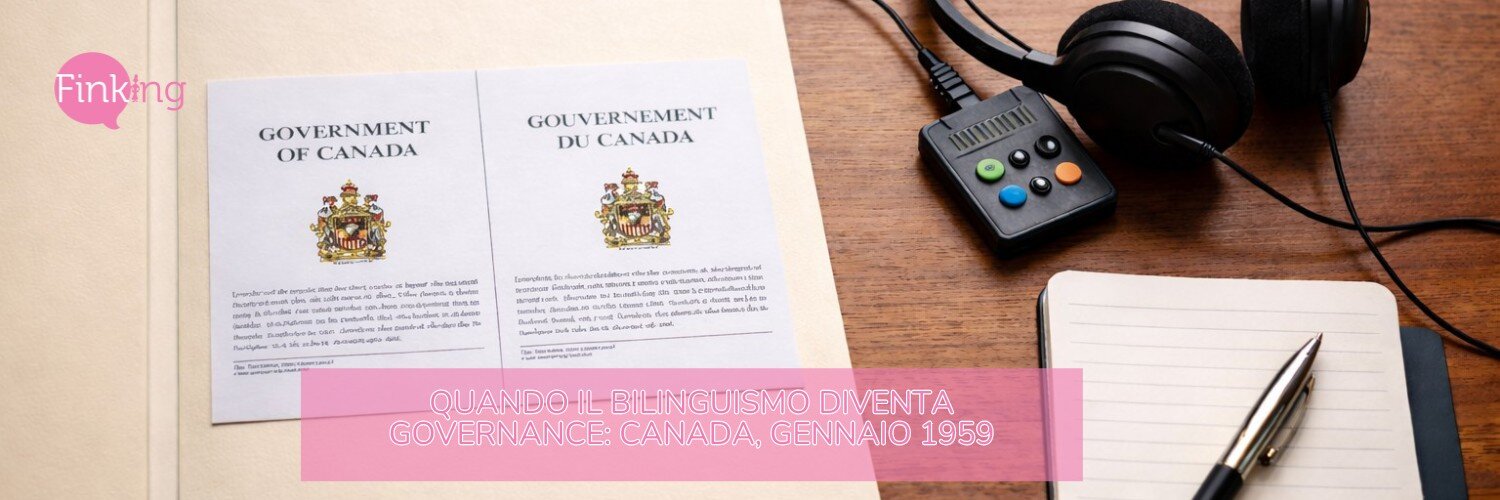
In January 1959, the Canadian Parliament officially introduced simultaneous interpreting as a permanent service within national institutions. It was not the birth of simultaneous interpreting in an absolute sense, but it was a decisive moment: for the first time, a major bilingual country chose to transform multilingualism into a structure, not just a symbolic gesture.
Until then, the two languages coexisted, but did not always truly communicate. With the adoption of simultaneous interpreting, Canada affirmed a simple yet powerful principle: if two languages are languages of democracy, they must guarantee everyone the ability to participate, understand, and decide. It was an organisational, technical, cultural, and political choice all at once.

But that turning point did not concern only the spoken word. From that moment on, it became clear that a bilingual democracy truly works only when what remains in writing, laws, regulations, public notices, official communications, administrative documents, is precise, reliable, and understandable in every language involved. Simultaneous interpreting opened the way; institutional translations consolidated its foundations.
Institutional translations have an extremely delicate role: they ensure terminological consistency, legal accuracy, rigour, and respect for official registers. They are not mere “text transfers”, but concrete tools of participation: they allow citizens to exercise their rights, understand decisions, and trust institutions in any language.
Because, then as now, the message remains the same: multilingualism cannot be improvised. It must be built, organised, and supported with professionalism.
And choosing accurate institutional translations means choosing transparency, fairness, and responsibility towards the community you represent.


