

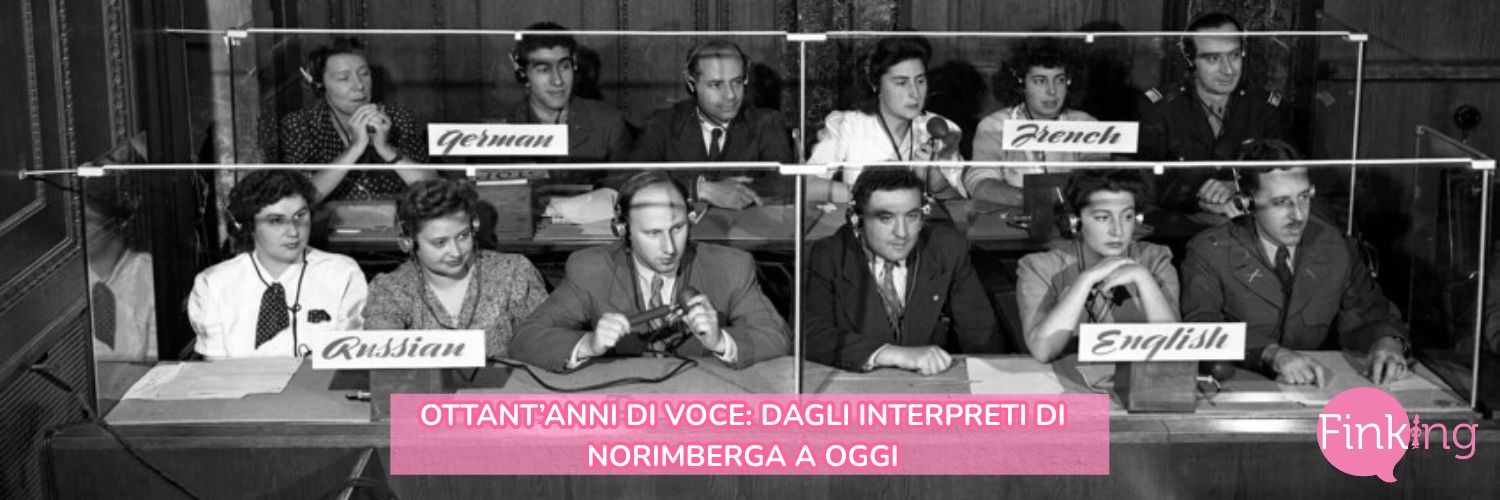
Eighty years ago, in November 1945, one of the most significant chapters in modern history began in Nuremberg. Not only for international justice, but also for the official birth of simultaneous interpreting as we know it today.
Before that moment, interpreters worked almost exclusively in consecutive mode: they listened, took notes, and translated afterwards. With four languages in the courtroom (English, French, Russian and German) and thousands of hours of testimonies, it was unthinkable to maintain that model.
And so, thanks to an experimental system developed by IBM, modern simultaneous interpreting was born.
The first Nuremberg interpreters had no schools, no manuals, no standards. Many were multilingual refugees, students or former soldiers with natural linguistic abilities. They invented on the spot the techniques and turn-taking practices that today form the foundation of booth work.
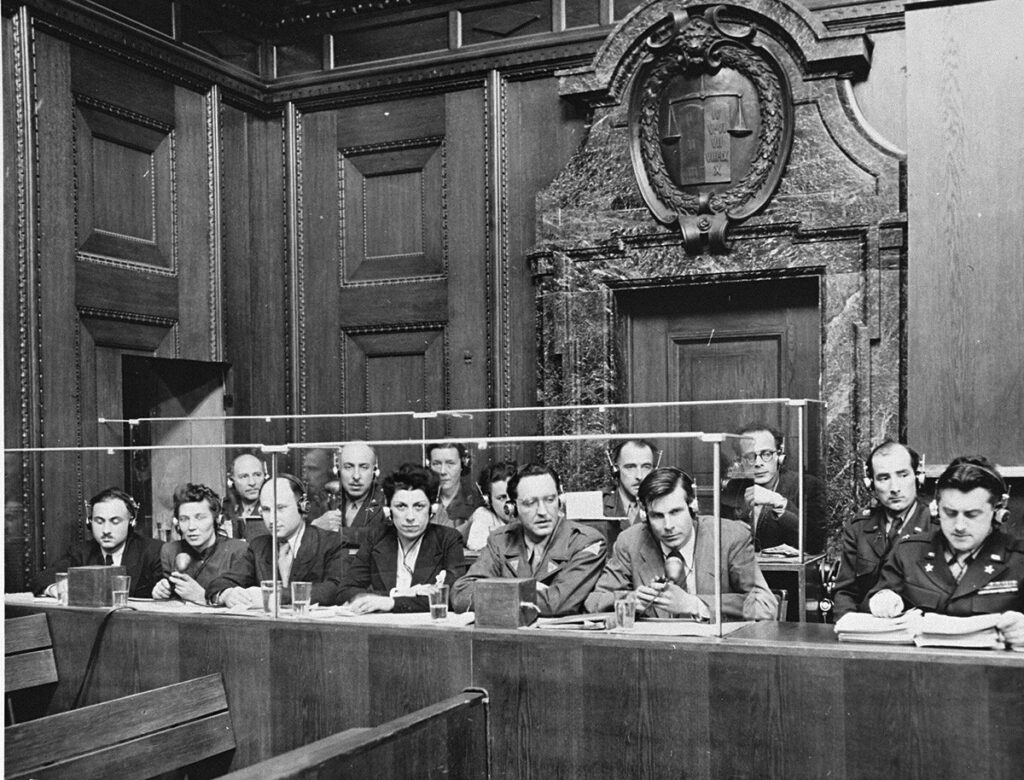
Over the years, the profession has evolved profoundly. Technology has changed: from heavy headsets and wired microphones to acoustically perfect booths, remote interpreting and digital platforms.
Shifts
At Nuremberg, interpreters worked so intensely that, in the early days, they were replaced every 10–15 minutes. Simultaneous interpreting was so new that no one had yet developed the mental stamina to endure longer shifts.
Today, when an assignment lasts more than an hour, interpreters work in pairs and alternate every 30 minutes.
Glossaries
In the very first days of the trial, interpreters passed handwritten notes with terminology from one booth to another. It is considered the first collaborative glossary in the history of simultaneous interpreting.
Today, thanks to technology, there are countless ways to share materials among booth mates and colleagues.
Technical issues
In the early Nuremberg booths, the heat from the lamps and equipment was so intense that interpreters always kept a bottle of cold water next to them… not for drinking, but to place on the scorching headphones between shifts.
Thankfully, modern equipment has eliminated much of this added stress — including the receivers you can rent from us!
New terminology
In the first days, many shared technical terms simply didn’t exist. Some interpreters coined expressions on the spot, which were then adopted by others. Several of these went on to become part of the legal language of the time.
Even today, some of those terms are still used in the legal field. If you’d like to learn more, don’t miss our upcoming news articles!
Despite all the changes, one thing has remained identical from 1945 to today: interpreters continue to build bridges.


