

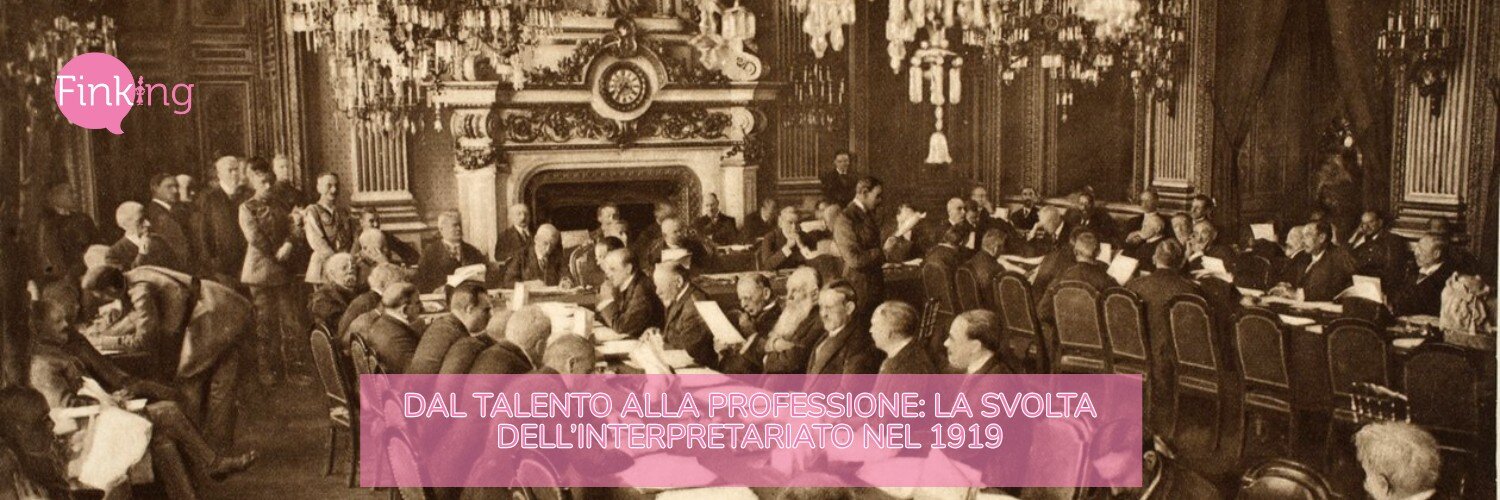
January is often the month of new beginnings. For interpreting, this is literally true: in January 1919, during the Paris Peace Conference, interpreting stopped being an “occasional” talent and became a recognised, indispensable competence that made international dialogue possible. Until then, diplomacy largely spoke French, but many delegates did not truly master it. Decisions were delicate, balances were fragile, and interpreting suddenly ceased to be a helpful support: it became a necessary condition for the work to continue.
There were no schools, no structured methods. Many interpreters came from diplomatic or academic backgrounds, others had grown up bilingual and literally invented their way of working while doing it. It was in those days that discipline, method and professional responsibility were born. Interpreters worked in long consecutive, with speeches of ten or fifteen minutes, relying on memory, concentration and note-taking systems that were just beginning to evolve into real techniques. This is why many historians point precisely to January 1919 as the moment when interpreting gained a professional identity: it shifted from personal ability to an acknowledged profession, role and function.
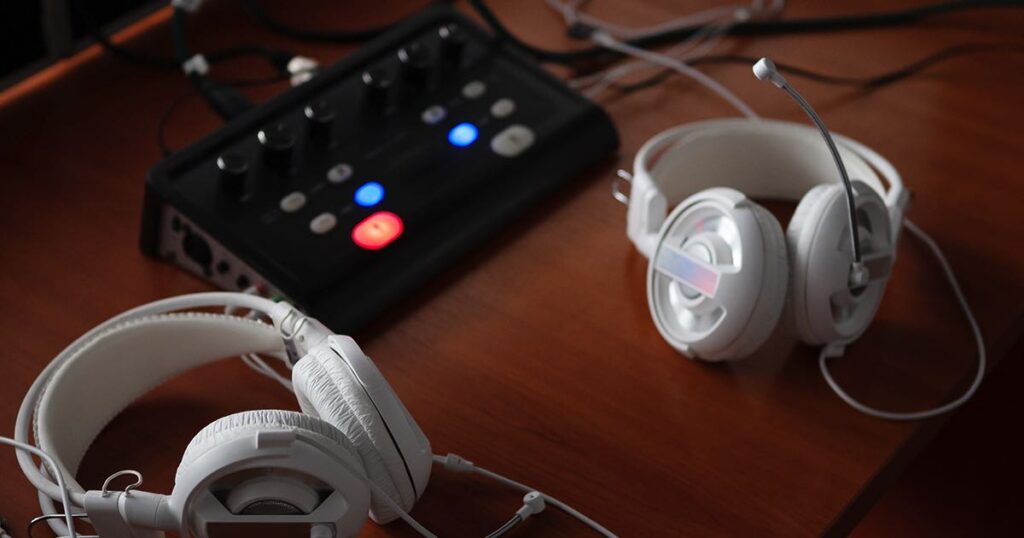
From that context also emerged the evolution that would later lead to the development of simultaneous interpreting. Not as a spectacular gesture or a technological experiment, but as a concrete response to a real need: allowing languages to interact in real time, keeping pace with thought, debate and decision-making. A challenge that once seemed impossible and that, through method, preparation and shared work, has become an essential tool for contemporary communication.
January 1919 reminds us that interpreting was not born from theory, but from the need to understand one another when misunderstanding is simply not an option. It was born as a profession of responsibility, precision, cultural awareness and care for the human context. And that legacy lives on today, in every conference, every event, every international meeting where languages must truly dialogue, not merely coexist.
It is a legacy we continue to carry forward in our daily work: well-trained interpreters, careful attention to quality and message consistency, and the right technologies to make simultaneous interpreting a natural, discreet and effective tool. Because then, as now, the goal remains the same: creating the conditions for people to truly understand one another.


