


Spending the summer in Venice means losing yourself in a city that continues to speak the languages of its history – Hebrew, Armenian, Greek, Venetian, French. Even in its quietest corners, you can rediscover places where the culture of the lagoon interacts with internationality, memory and the present.
In the Castello district, the Querini is a house-museum, a library and a contemporary art space. Here, the Venetian patrician past coexists with Carlo Scarpa’s design and photographic exhibitions with a global reach. The library is frequented by scholars from all over the world, while cultural events are held regularly in several languages.
One of the oldest confraternity buildings in Venice, today it is a venue for conferences, exhibitions and concerts. Its decorated and solemn Renaissance halls often host international events. It is a living example of how translation and interpreting contribute to understanding between cultures.
- Campo dei Mori and Casa di Tintoretto
A charming corner of Cannaregio, where the statues of the ‘Mori’ — three merchants of Eastern origin — watch over the passing centuries. The name, the sculpted faces and the proximity to Tintoretto’s house make this square a place where the history of migration and trade is visible.
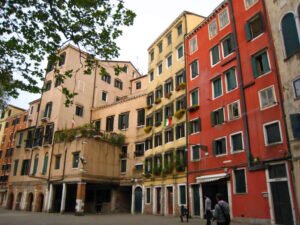
A neighbourhood that tells stories of coexistence, diaspora and culture. The first ghetto in Europe (established in 1516) is now home to synagogues, a Jewish museum and cultural activities in several languages. With guided tours in Hebrew, Italian and English, and itineraries that intertwine Yiddish and Venetian, the Ghetto is a concrete testimony to a multilingual and deeply human Venice.
For us at Finking, these places are not only cultural landmarks, but also living examples of how languages shape space, relationships and memory. In the summer of 2025, we will continue to work to ensure that every word is heard – everywhere, in every language.


